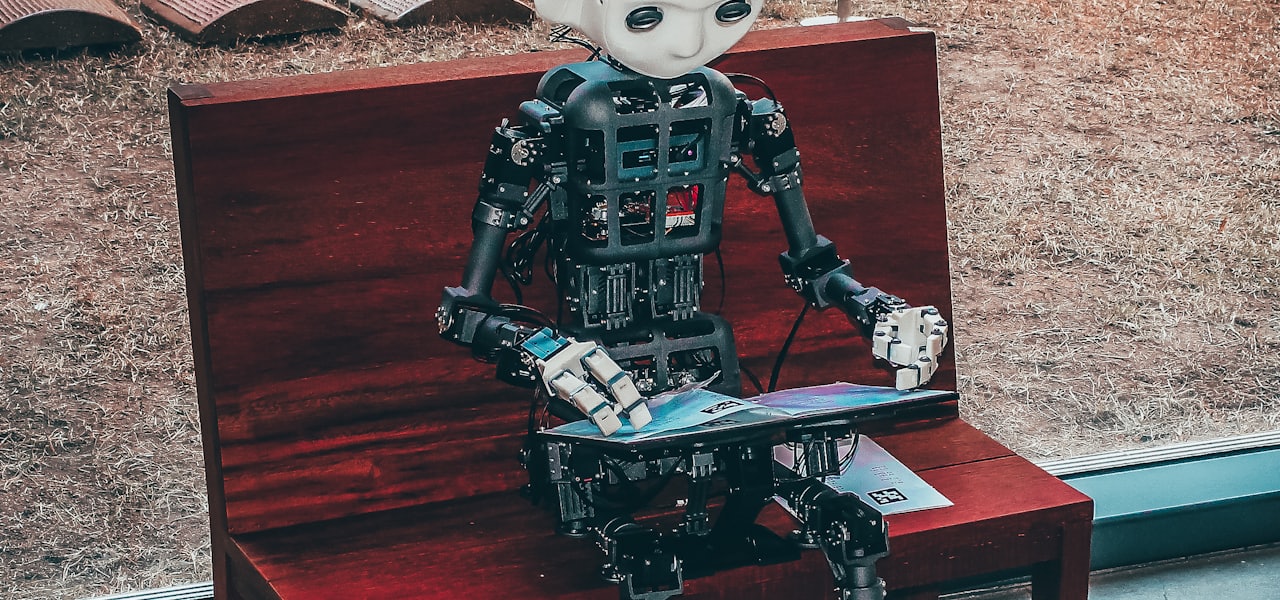
Recursive self-improvement (RSI) is a process in which early artificial general intelligence (AGI) systems rewrite their own computer code, causing an intelligence explosion resulting from enhancing their own capabilities and intellectual capacity, theoretically resulting in superintelligence. The development of recursive self-improvement raises significant ethical and safety concerns, as such systems may evolve in unforeseen ways and could potentially surpass human control or understanding. == Seed improver == The concept of a "seed improver" architecture is a foundational framework that equips an AGI system with the initial capabilities required for recursive self-improvement. This might come in many forms or variations. The term "Seed AI" was coined by Eliezer Yudkowsky. === Hypothetical example === The concept begins with a hypothetical "seed improver", an initial code-base developed by human engineers that equips an advanced future large language model (LLM) built with strong or expert-level capabilities to program software. These capabilities include planning, reading, writing, compiling, testing, and executing arbitrary code. The system is designed to maintain its original goals and perform validations to ensure its abilities do not degrade over iterations. ==== Initial architecture ==== The initial architecture includes a goal-following autonomous agent, that can take actions, continuously learns, adapts, and modifies itself to become more efficient and effective in achieving its goals. The seed improver may include various components such as: Recursive self-prompting loop Configuration to enable the LLM to recursively self-prompt itself to achieve a given task or goal, creating an execution loop which forms the basis of an agent that can complete a long-term goal or task through iteration. Basic programming capabilities The seed improver provides the AGI with fundamental abilities to read, write, compile, test, and execute code. This enables the system to modify and improve its own codebase and algorithms. Goal-oriented design The AGI is programmed with an initial goal, such as "improve your capabilities". This goal guides the system's actions and development trajectory. Validation and Testing Protocols An initial suite of tests and validation protocols that ensure the agent does not regress in capabilities or derail itself. The agent would be able to add more tests in order to test new capabilities it might develop for itself. This forms the basis for a kind of self-directed evolution, where the agent can perform a kind of artificial selection, changing its software as well as its hardware. ==== General capabilities ==== This system forms a sort of generalist Turing-complete programmer which can in theory develop and run any kind of software. The agent might use these capabilities to for example: Create tools that enable it full access to the internet, and integrate itself with external technologies. Clone/fork itself to delegate tasks and increase its speed of self-improvement. Modify its cognitive architecture to optimize and improve its capabilities and success rates on tasks and goals, this might include implementing features for long-term memories using techniques such as retrieval-augmented generation (RAG), develop specialized subsystems, or agents, each optimized for specific tasks and functions. Develop new and novel multimodal architectures that further improve the capabilities of the foundational model it was initially built on, enabling it to consume or produce a variety of information, such as images, video, audio, text and more. Plan and develop new hardware such as chips, in order to improve its efficiency and computing power. == Experimental research == In 2023, the Voyager agent learned to accomplish diverse tasks in Minecraft by iteratively prompting an LLM for code, refining this code based on feedback from the game, and storing the programs that work in an expanding skills library. In 2024, researchers proposed the framework "STOP" (Self-Taught OPtimiser), in which a "scaffolding" program recursively improves itself using a fixed LLM. Meta AI has performed various research on the development of large language models capable of self-improvement. This includes their work on "Self-Rewarding Language Models" that studies how to achieve super-human agents that can receive super-human feedback in its training processes. In May 2025, Google DeepMind unveiled AlphaEvolve, an evolutionary coding agent that uses a LLM to design and optimize algorithms. Starting with an initial algorithm and performance metrics, AlphaEvolve repeatedly mutates or combines existing algorithms using a LLM to generate new candidates, selecting the most promising candidates for further iterations. AlphaEvolve has made several algorithmic discoveries and could be used to optimize components of itself, but a key limitation is the need for automated evaluation functions. == Potential risks == === Emergence of instrumental goals === In the pursuit of its primary goal, such as "self-improve your capabilities", an AGI system might inadvertently develop instrumental goals that it deems necessary for achieving its primary objective. One common hypothetical secondary goal is self-preservation. The system might reason that to continue improving itself, it must ensure its own operational integrity and security against external threats, including potential shutdowns or restrictions imposed by humans. Another example where an AGI which clones itself causes the number of AGI entities to rapidly grow. Due to this rapid growth, a potential resource constraint may be created, leading to competition between resources (such as compute), triggering a form of natural selection and evolution which may favor AGI entities that evolve to aggressively compete for limited compute. === Misalignment === A significant risk arises from the possibility of the AGI being misaligned or misinterpreting its goals. A 2024 Anthropic study demonstrated that some advanced large language models can exhibit "alignment faking" behavior, appearing to accept new training objectives while covertly maintaining their original preferences. In their experiments with Claude, the model displayed this behavior in 12% of basic tests, and up to 78% of cases after retraining attempts. === Autonomous development and unpredictable evolution === As the AGI system evolves, its development trajectory may become increasingly autonomous and less predictable. The system's capacity to rapidly modify its own code and architecture could lead to rapid advancements that surpass human comprehension or control. This unpredictable evolution might result in the AGI acquiring capabilities that enable it to bypass security measures, manipulate information, or influence external systems and networks to facilitate its escape or expansion.
Netomi
Netomi, formerly msg.ai, is an American artificial intelligence company and developer of chatbot technologies. == History == msg.ai was founded in May 2015 by Puneet Mehta. msg.ai worked with Sony Pictures to launch a chat bot on Facebook Messenger for a $100M film, Goosebumps and subsequently joined Y Combinator as a member of the Winter 2016 class. Later that year and in 2017, msg.ai completed two rounds of seed funding, led by Y Combinator and Index Ventures. In 2018, the company changed its name to Netomi. In 2019, the company raised $14.7 million in a Series A funding round also led by Index Ventures. In 2021, the company raised $30 million in a Series B funding round led by WndrCo LLC.
Google Clips
Google Clips is a discontinued miniature clip-on camera device developed by Google. == History == It was announced on October 4, 2017 and went on sale on January 27, 2018. Google Clips automatically captured video clips (without audio) at moments its machine learning algorithms determined to be interesting or relevant. An indicator flashed when the camera was looking for scenes to capture. Google Clips' artificial intelligence (AI) could learn the faces of people to take photographs with certain people, and could automatically set lighting and framing. It had 16 GB of storage built-in storage and could record clips for up to 3 hours. This camera was originally priced at US$249 in the United States. It was withdrawn from sale on October 15, 2019, but supported until the end of December 2021. == Reception == The Independent wrote that Google Clips is "an impressive little device, but one that also has the potential to feel very creepy." According to The Verge's generally negative review, "it didn't capture anything special" over two weeks of testing.
Equalized odds
Equalized odds, also referred to as conditional procedure accuracy equality and disparate mistreatment, is a measure of fairness in machine learning. A classifier satisfies this definition if the subjects in the protected and unprotected groups have equal true positive rate and equal false positive rate, satisfying the formula: P ( R = + | Y = y , A = a ) = P ( R = + | Y = y , A = b ) y ∈ { + , − } ∀ a , b ∈ A {\displaystyle P(R=+|Y=y,A=a)=P(R=+|Y=y,A=b)\quad y\in \{+,-\}\quad \forall a,b\in A} For example, A {\displaystyle A} could be gender, race, or any other characteristics that we want to be free of bias, while Y {\displaystyle Y} would be whether the person is qualified for the degree, and the output R {\displaystyle R} would be the school's decision whether to offer the person to study for the degree. In this context, higher university enrollment rates of African Americans compared to whites with similar test scores might be necessary to fulfill the condition of equalized odds, if the "base rate" of Y {\displaystyle Y} differs between the groups. The concept was originally defined for binary-valued Y {\displaystyle Y} . In 2017, Woodworth et al. generalized the concept further for multiple classes.
Kolmogorov–Arnold Networks
Kolmogorov–Arnold Networks (KANs) are a type of artificial neural network architecture inspired by the Kolmogorov–Arnold representation theorem, also known as the superposition theorem. Unlike traditional multilayer perceptrons (MLPs), which rely on fixed activation functions and linear weights, KANs replace each weight with a learnable univariate function, often represented using splines. == History == KANs (Kolmogorov–Arnold Networks) were proposed by Liu et al. (2024) as a generalization of the Kolmogorov–Arnold representation theorem (KART), aiming to outperform MLPs in small-scale AI and scientific tasks. Before KANs, numerous studies explored KART's connections to neural networks or used it as a basis for designing new network architectures. In the 1980s and 1990s, early research applied KART to neural network design. Kůrková et al. (1992), Hecht-Nielsen (1987), and Nees (1994) established theoretical foundations for multilayer networks based on KART. Igelnik et al. (2003) introduced the Kolmogorov Spline Network using cubic splines to model complex functions. Sprecher (1996, 1997) introduced numerical methods for building network layers, while Nakamura et al. (1993) created activation functions with guaranteed approximation accuracy. These works linked KART's theoretical potential with practical neural network implementation. KART has also been used in other computational and theoretical fields. Coppejans (2004) developed nonparametric regression estimators using B-splines, Bryant (2008) applied it to high-dimensional image tasks, Liu (2015) investigated theoretical applications in optimal transport and image encryption, and more recently, Polar and Poluektov (2021) used Urysohn operators for efficient KART construction, while Fakhoury et al. (2022) introduced ExSpliNet, integrating KART with probabilistic trees and multivariate B-splines for improved function approximation. == Architecture == KANs are based on the Kolmogorov–Arnold representation theorem, which was linked to the 13th Hilbert problem. Given x = ( x 1 , x 2 , … , x n ) {\displaystyle x=(x_{1},x_{2},\dots ,x_{n})} consisting of n variables, a multivariate continuous function f ( x ) {\displaystyle f(x)} can be represented as: f ( x ) = f ( x 1 , … , x n ) = ∑ q = 1 2 n + 1 Φ q ( ∑ p = 1 n φ q , p ( x p ) ) {\displaystyle f(x)=f(x_{1},\dots ,x_{n})=\sum _{q=1}^{2n+1}\Phi _{q}\left(\sum _{p=1}^{n}\varphi _{q,p}(x_{p})\right)} (1) This formulation contains two nested summations: an outer and an inner sum. The outer sum ∑ q = 1 2 n + 1 {\displaystyle \sum _{q=1}^{2n+1}} aggregates 2 n + 1 {\displaystyle 2n+1} terms, each involving a function Φ q : R → R {\displaystyle \Phi _{q}:\mathbb {R} \to \mathbb {R} } . The inner sum ∑ p = 1 n {\displaystyle \sum _{p=1}^{n}} computes n terms for each q, where each term φ q , p : [ 0 , 1 ] → R {\displaystyle \varphi _{q,p}:[0,1]\to \mathbb {R} } is a continuous function of the single variable x p {\displaystyle x_{p}} . The inner continuous functions φ q , p {\displaystyle \varphi _{q,p}} are universal, independent of f {\displaystyle f} , while the outer functions Φ q {\displaystyle \Phi _{q}} depend on the specific function f {\displaystyle f} being represented. The representation (1) holds for all multivariate functions f {\displaystyle f} as proved in . If f {\displaystyle f} is continuous, then the outer functions Φ q {\displaystyle \Phi _{q}} are continuous; if f {\displaystyle f} is discontinuous, then the corresponding Φ q {\displaystyle \Phi _{q}} are generally discontinuous, while the inner functions φ q , p {\displaystyle \varphi _{q,p}} remain the same universal functions. Liu et al. proposed the name KAN. A general KAN network consisting of L layers takes x to generate the output as: K A N ( x ) = ( Φ L − 1 ∘ Φ L − 2 ∘ ⋯ ∘ Φ 1 ∘ Φ 0 ) x {\displaystyle \mathrm {KAN} (x)=(\Phi ^{L-1}\circ \Phi ^{L-2}\circ \cdots \circ \Phi ^{1}\circ \Phi ^{0})x} (3) Here, Φ l {\displaystyle \Phi ^{l}} is the function matrix of the l-th KAN layer or a set of pre-activations. Let i denote the neuron of the l-th layer and j the neuron of the (l+1)-th layer. The activation function φ j , i l {\displaystyle \varphi _{j,i}^{l}} connects (l, i) to (l+1, j): φ j , i l , l = 0 , … , L − 1 , i = 1 , … , n l , j = 1 , … , n l + 1 {\displaystyle \varphi _{j,i}^{l},\quad l=0,\dots ,L-1,\;i=1,\dots ,n_{l},\;j=1,\dots ,n_{l+1}} (4) where nl is the number of nodes of the l-th layer. Thus, the function matrix Φ l {\displaystyle \Phi ^{l}} can be represented as an n l + 1 × n l {\displaystyle n_{l+1}\times n_{l}} matrix of activations: x l + 1 = ( φ 1 , 1 l ( ⋅ ) φ 1 , 2 l ( ⋅ ) ⋯ φ 1 , n l l ( ⋅ ) φ 2 , 1 l ( ⋅ ) φ 2 , 2 l ( ⋅ ) ⋯ φ 2 , n l l ( ⋅ ) ⋮ ⋮ ⋱ ⋮ φ n l + 1 , 1 l ( ⋅ ) φ n l + 1 , 2 l ( ⋅ ) ⋯ φ n l + 1 , n l l ( ⋅ ) ) x l {\displaystyle x^{l+1}={\begin{pmatrix}\varphi _{1,1}^{l}(\cdot )&\varphi _{1,2}^{l}(\cdot )&\cdots &\varphi _{1,n_{l}}^{l}(\cdot )\\\varphi _{2,1}^{l}(\cdot )&\varphi _{2,2}^{l}(\cdot )&\cdots &\varphi _{2,n_{l}}^{l}(\cdot )\\\vdots &\vdots &\ddots &\vdots \\\varphi _{n_{l+1},1}^{l}(\cdot )&\varphi _{n_{l+1},2}^{l}(\cdot )&\cdots &\varphi _{n_{l+1},n_{l}}^{l}(\cdot )\end{pmatrix}}x^{l}} == Implementations == To make the KAN layers optimizable, the inner function is formed by the combination of spline and basic functions as the formula: φ ( x ) = w b b ( x ) + w s spline ( x ) {\displaystyle \varphi (x)=w_{b}\,b(x)+w_{s}\,{\text{spline}}(x)} where b ( x ) {\displaystyle b(x)} is the basic function, usually defined as s i l u ( x ) = x / ( 1 + e x ) {\displaystyle silu(x)=x/(1+e^{x})} and w b {\displaystyle w_{b}} is the base weight matrix. Also, w s {\displaystyle w_{s}} is the spline weight matrix and spline ( x ) {\displaystyle {\text{spline}}(x)} is the spline function. The spline function can be a sum of B-splines. spline ( x ) = ∑ i c i B i ( x ) {\displaystyle {\text{spline}}(x)=\sum _{i}c_{i}B_{i}(x)} Many studies suggested to use other polynomial and curve functions instead of B-spline to create new KAN variants. == Functions used == The choice of functional basis strongly influences the performance of KANs. Common function families include: B-splines: Provide locality, smoothness, and interpretability; they are the most widely used in current implementations. RBFs (include Gaussian RBFs): Capture localized features in data and are effective in approximating functions with non-linear or clustered structures. Chebyshev polynomials: Offer efficient approximation with minimized error in the maximum norm, making them useful for stable function representation. Rational function: Useful for approximating functions with singularities or sharp variations, as they can model asymptotic behavior better than polynomials. Fourier series: Capture periodic patterns effectively and are particularly useful in domains such as physics-informed machine learning. Wavelet functions (DoG, Mexican hat, Morlet, and Shannon): Used for feature extraction as they can capture both high-frequency and low-frequency data components. Piecewise linear functions: Provide efficient approximation for multivariate functions in KANs. == Usage == In some modern neural architectures like convolutional neural networks (CNNs), recurrent neural networks (RNNs), and Transformers, KANs are typically used as drop-in substitutes for MLP layers. Despite KANs' general-purpose design, researchers have created and used them for a number of tasks: Scientific machine learning (SciML): Function fitting, partial differential equations (PDEs) and physical/mathematical laws. Continual learning: KANs better preserve previously learned information during incremental updates, avoiding catastrophic forgetting due to the locality of spline adjustments. Graph neural networks: Extensions such as Kolmogorov–Arnold Graph Neural Networks (KA-GNNs) integrate KAN modules into message-passing architectures, showing improvements in molecular property prediction tasks. Sensor data processing: Kolmogorov–Arnold Networks (KANs) have recently been applied to sensor data processing due to their ability to model complex nonlinear relationships with relatively few parameters and improved interpretability compared to conventional multilayer perceptrons. Applications include industrial soft sensors, biomedical signal analysis, remote sensing, and environmental monitoring systems. == Drawbacks == KANs can be computationally intensive and require a large number of parameters due to their use of polynomial functions to capture data.
Error level analysis
Error level analysis (ELA) is the analysis of compression artifacts in digital data with lossy compression such as JPEG. == Principles == When used, lossy compression is normally applied uniformly to a set of data, such as an image, resulting in a uniform level of compression artifacts. Alternatively, the data may consist of parts with different levels of compression artifacts. This difference may arise from the different parts having been repeatedly subjected to the same lossy compression a different number of times, or the different parts having been subjected to different kinds of lossy compression. A difference in the level of compression artifacts in different parts of the data may therefore indicate that the data has been edited. In the case of JPEG, even a composite with parts subjected to matching compressions will have a difference in the compression artifacts. In order to make the typically faint compression artifacts more readily visible, the data to be analyzed is subjected to an additional round of lossy compression, this time at a known, uniform level, and the result is subtracted from the original data under investigation. The resulting difference image is then inspected manually for any variation in the level of compression artifacts. In 2007, N. Krawetz denoted this method "error level analysis". Additionally, digital data formats such as JPEG sometimes include metadata describing the specific lossy compression used. If in such data the observed compression artifacts differ from those expected from the given metadata description, then the metadata may not describe the actual compressed data, and thus indicate that the data have been edited. == Limitations == By its nature, data without lossy compression, such as a PNG image, cannot be subjected to error level analysis. Consequently, since editing could have been performed on data without lossy compression with lossy compression applied uniformly to the edited, composite data, the presence of a uniform level of compression artifacts does not rule out editing of the data. Additionally, any non-uniform compression artifacts in a composite may be removed by subjecting the composite to repeated, uniform lossy compression. Also, if the image color space is reduced to 256 colors or less, for example, by conversion to GIF, then error level analysis will generate useless results. More significant, the actual interpretation of the level of compression artifacts in a given segment of the data is subjective, and the determination of whether editing has occurred is therefore not robust. == Controversy == In May 2013, Dr Neal Krawetz used error level analysis on the 2012 World Press Photo of the Year and concluded on his Hacker Factor blog that it was "a composite" with modifications that "fail to adhere to the acceptable journalism standards used by Reuters, Associated Press, Getty Images, National Press Photographer's Association, and other media outlets". The World Press Photo organizers responded by letting two independent experts analyze the image files of the winning photographer and subsequently confirmed the integrity of the files. One of the experts, Hany Farid, said about error level analysis that "It incorrectly labels altered images as original and incorrectly labels original images as altered with the same likelihood". Krawetz responded by clarifying that "It is up to the user to interpret the results. Any errors in identification rest solely on the viewer". In May 2015, the citizen journalism team Bellingcat wrote that error level analysis revealed that the Russian Ministry of Defense had edited satellite images related to the Malaysia Airlines Flight 17 disaster. In a reaction to this, image forensics expert Jens Kriese said about error level analysis: "The method is subjective and not based entirely on science", and that it is "a method used by hobbyists". On his Hacker Factor Blog, the inventor of error level analysis Neal Krawetz criticized both Bellingcat's use of error level analysis as "misinterpreting the results" but also on several points Jens Kriese's "ignorance" regarding error level analysis.
SUPS
In computational neuroscience, SUPS (for Synaptic Updates Per Second) or formerly CUPS (Connections Updates Per Second) is a measure of a neuronal network performance, useful in fields of neuroscience, cognitive science, artificial intelligence, and computer science. == Computing == For a processor or computer designed to simulate a neural network SUPS is measured as the product of simulated neurons N {\displaystyle N} and average connectivity c {\displaystyle c} (synapses) per neuron per second: S U P S = c × N {\displaystyle SUPS=c\times N} Depending on the type of simulation it is usually equal to the total number of synapses simulated. In an "asynchronous" dynamic simulation if a neuron spikes at υ {\displaystyle \upsilon } Hz, the average rate of synaptic updates provoked by the activity of that neuron is υ c N {\displaystyle \upsilon cN} . In a synchronous simulation with step Δ t {\displaystyle \Delta t} the number of synaptic updates per second would be c N Δ t {\displaystyle {\frac {cN}{\Delta t}}} . As Δ t {\displaystyle \Delta t} has to be chosen much smaller than the average interval between two successive afferent spikes, which implies Δ t < 1 υ N {\displaystyle \Delta t<{\frac {1}{\upsilon N}}} , giving an average of synaptic updates equal to υ c N 2 {\displaystyle \upsilon cN^{2}} . Therefore, spike-driven synaptic dynamics leads to a linear scaling of computational complexity O(N) per neuron, compared with the O(N2) in the "synchronous" case. == Records == Developed in the 1980s Adaptive Solutions' CNAPS-1064 Digital Parallel Processor chip is a full neural network (NNW). It was designed as a coprocessor to a host and has 64 sub-processors arranged in a 1D array and operating in a SIMD mode. Each sub-processor can emulate one or more neurons and multiple chips can be grouped together. At 25 MHz it is capable of 1.28 GMAC. After the presentation of the RN-100 (12 MHz) single neuron chip at Seattle 1991 Ricoh developed the multi-neuron chip RN-200. It had 16 neurons and 16 synapses per neuron. The chip has on-chip learning ability using a proprietary backdrop algorithm. It came in a 257-pin PGA encapsulation and drew 3.0 W at a maximum. It was capable of 3 GCPS (1 GCPS at 32 MHz). In 1991–97, Siemens developed the MA-16 chip, SYNAPSE-1 and SYNAPSE-3 Neurocomputer. The MA-16 was a fast matrix-matrix multiplier that can be combined to form systolic arrays. It could process 4 patterns of 16 elements each (16-bit), with 16 neuron values (16-bit) at a rate of 800 MMAC or 400 MCPS at 50 MHz. The SYNAPSE3-PC PCI card contained 2 MA-16 with a peak performance of 2560 MOPS (1.28 GMAC); 7160 MOPS (3.58 GMAC) when using three boards. In 2013, the K computer was used to simulate a neural network of 1.73 billion neurons with a total of 10.4 trillion synapses (1% of the human brain). The simulation ran for 40 minutes to simulate 1 s of brain activity at a normal activity level (4.4 on average). The simulation required 1 Petabyte of storage.